
BPH & LUTS
Benign Prostatic Hyperplasia and Lower Urinary Tract Symptoms
Dr. Louis Liou, MD, PhD
BPH (Benign Prostatic Hyperplasia)
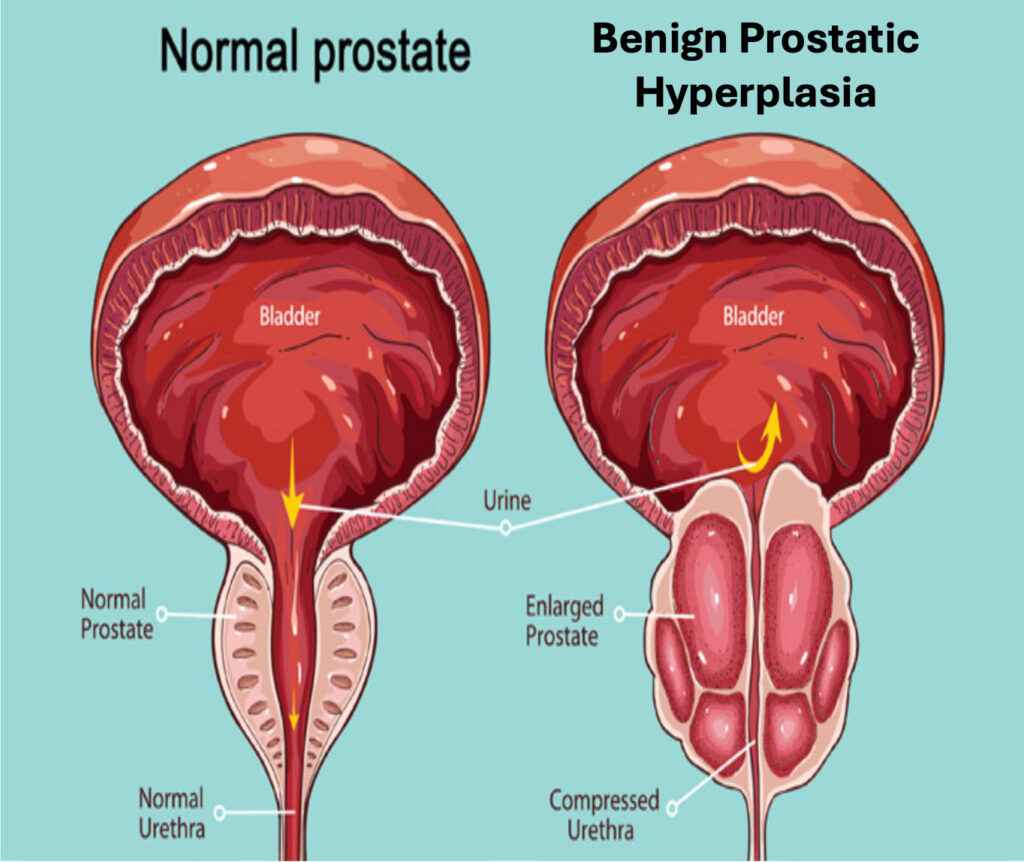
When men age, the prostate goes from a small gland that produces the seminal fluid to a adenoma (benign tumor) that grows into nodules. The growth continues and enlarged the prostate but also will block the urinary channel. Therefore the donut gets bigger but the donut hole gets smaller.
LUTS (Lower Urinary Tract Symptoms)
When the donut hole gets smaller, the bladder (which is a muscle) now has to squeeze harder to get the urine out. When a muscle is overworked, it will initially compensate and get larger but then it will fatigue and ultimately fail to contract anymore. This process is felt by the patient as lower urinary tract symptoms (LUTS).
Testing & Treatment
Bladder function and prostate obstruction needs to be investigated by diagnostic testing, This will get a baseline and also give guidance on what treatment is best.
Diagnostic Testing
Urodynamics & Cystoscopy
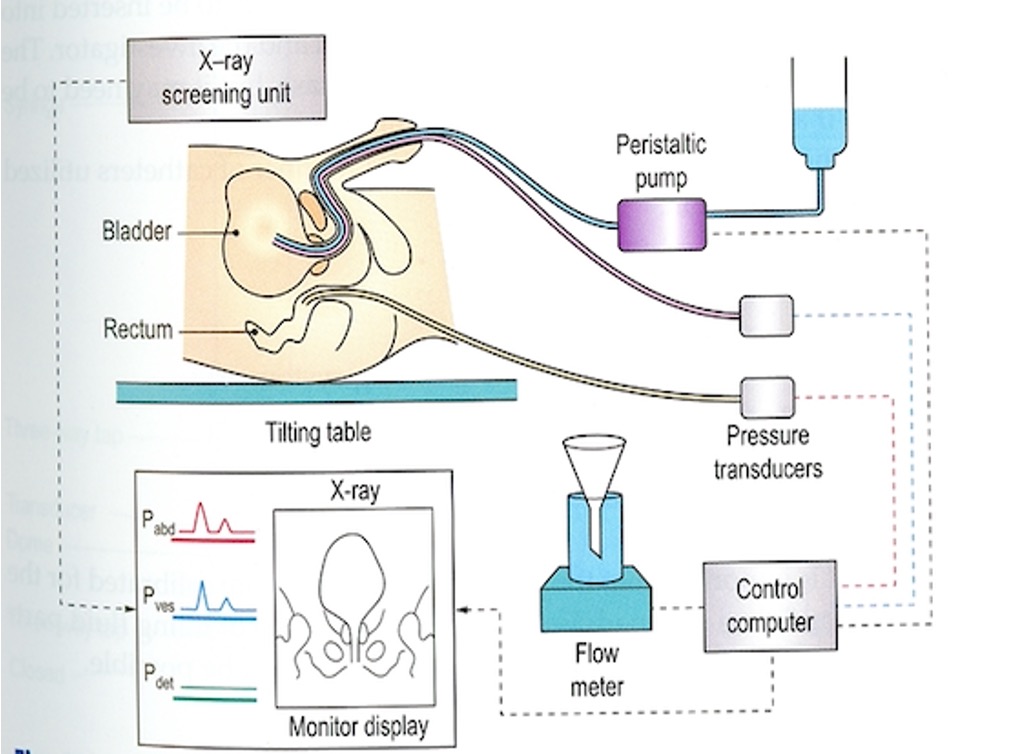
Urodynamics will measure how well or poorly the bladder is working, the contraction pressure of the bladder will need to be measured. A pressure sensor at the tip of a spaghetti strand tube will be inserted into the bladder, The bladder will also be filled with water via this tube. Once you feel that your bladder is full, the fluid will be turned off and you will go over to urinate into a funnel that will measure the force of your urinary stream.
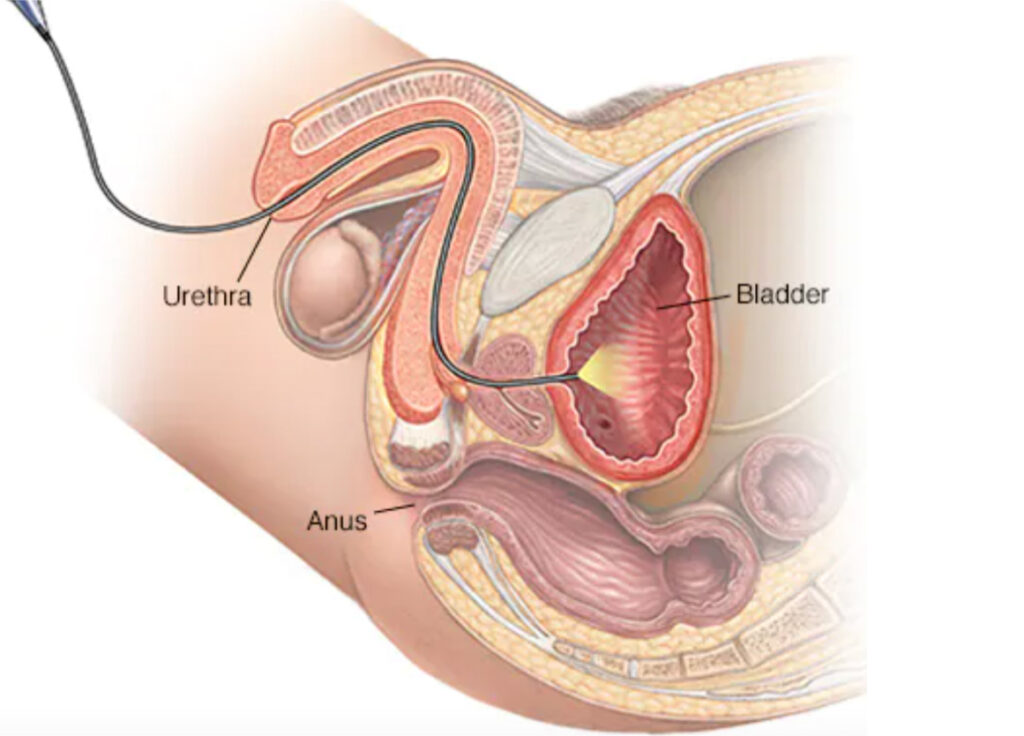
The second test, cystoscopy, will be to insert a small camera into the bladder to look at the prostate and bladder and see if there is anything wrong with either structure. Both tests are NOT painful but can be uncomfortable. Numbing lubricant is used and the tests are quick in the office. Usually the testing is done on separate days.
Treatment Options
The TURP has been the only surgery that was available for many years. (The old fashion rotor rooter).
Medications were developed in the 1980’s that included alpha blockers and 5HT inhibitors. These medications need to be taken for decades and ultimately were found to be a band-aid since they did not address the key problem of “making a bigger donut hole.”
Now there are many treatment options:
- Greenlight PVP (photovaporization of the Prostate)
- Rezum (water vapor to ablate tissue)
- Urolift (stitch to move the prostate tissue aside)
All have risks and benefits and diagnostic testing may guide which procedure is a better fit for you as well as determining how effective the procedure can be.
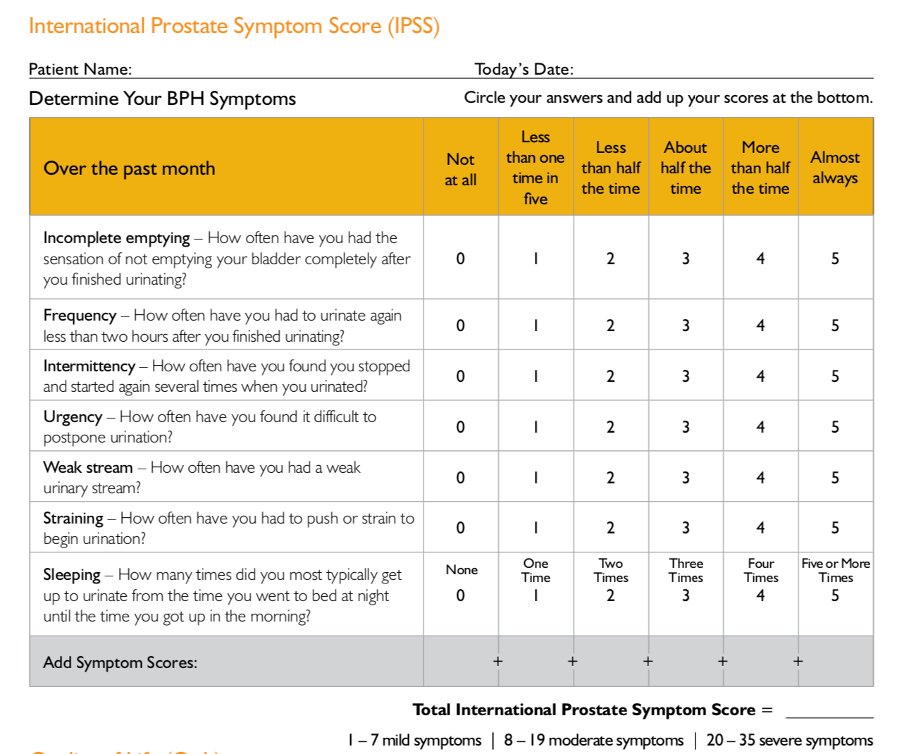
Are experiencing symptoms of BPH and/or LUTS?
Decision-making requires information and data. Come to the PINE Center (Prostate Institution of New England) to get the full picture and explore your options.
Join our BPH Awareness & Support Group on Facebook!
Looking for a safe space to ask the tough questions about BPH? Our Facebook group is a judgment-free zone dedicated to education and support. Come for the advice, stay for the community, and help us shine a light on prostate health.